

Two Parties, Two Internets
Republicans and Democrats aren’t just messaging differently, they’re talking in entirely different places

Republicans and Democrats use different words to describe the same things. That’s something I’ve spent a lot of time studying and writing about.
But there’s a more fundamental divide in political communications that’s not as simple as a difference in word choice, it’s that Republicans and Democrats are using different places to communicate at all.
Earlier this week, I showed my Research Methods class something I learned with DCinbox this week: mentions of Bluesky versus Rumble in official congressional e-newsletters (most of my students didn’t really know either platform…a few had heard of Bluesky and told me it was described as “woke Twitter” and none of them had heard of Rumble). Here’s what I showed them:
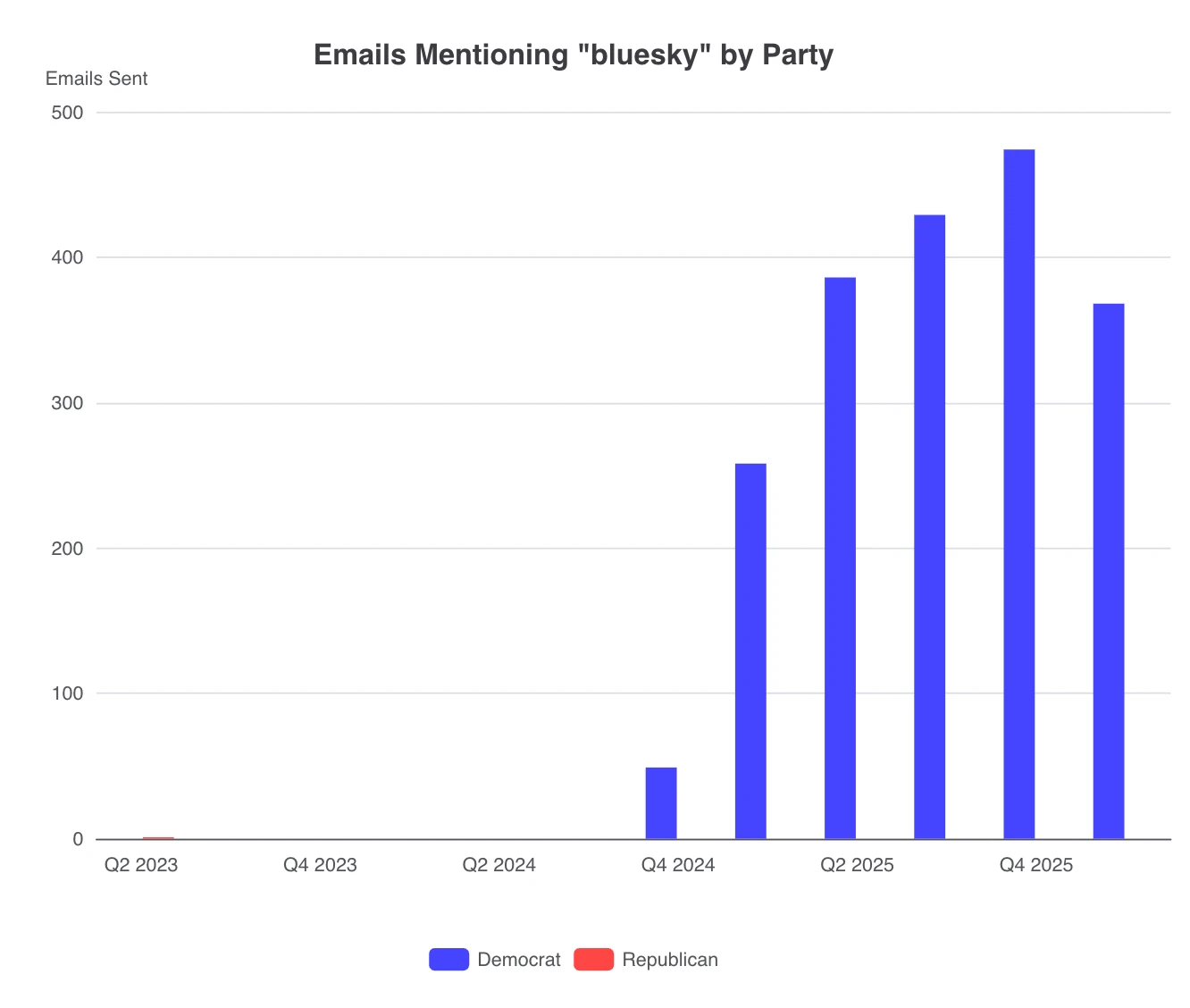
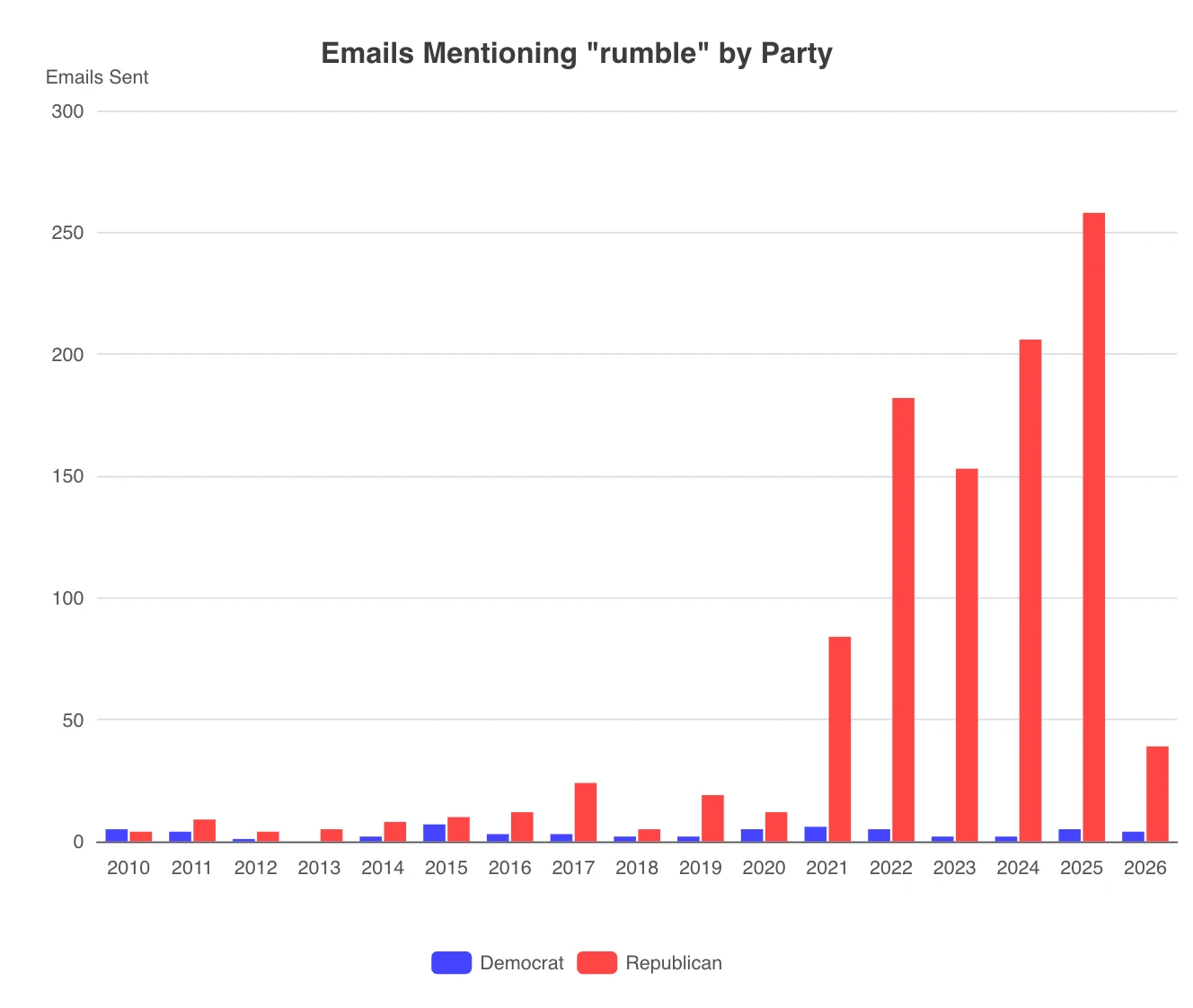
We all learned something visually in that Bluesky is exclusively mentioned by Democrats and nearly all of the Rumble mentions are from Republicans. The second learning is that on top of these platforms being partisan, they’re selectively (in)visible. And by that I mean if you’re not already in the ecosystem, you may not even know it exists. Which means it’s not just about what words political elites are using, it’s where the conversation is happening at all.
And the third learning is something that DCinbox teaches me all the time: Congressional Republicans are very good at communications, not only in how they stay on message and devise catchy terms, but also in how they make use of “owned” media outlets far more often Democrats.
What is Rumble???
OK - so not only did my students not know Rumble, but a number of my online contacts (in Bluesky(!)) copped to not knowing what Rumble was either. So for anyone whose in the same boat, here’s the short version.
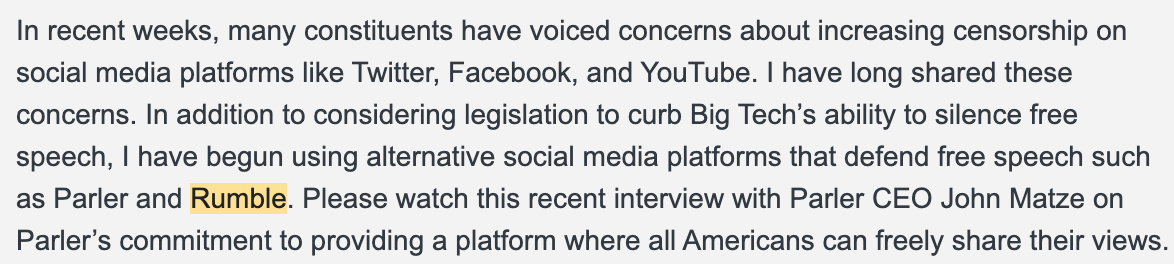
Rumble was founded in 2013 by Chris Pavlovski as a video-sharing platform initially designed to help small creators distribute and monetize their content without relying on traditional media gatekeepers. In 2020 as debates over content moderation intensified across major tech platforms having to do with COVID-19 information, Rumble capitalized on this moment by branding itself around free speech and minimal moderation and in turn became a favorite of congressional Republicans. The first mention of it came from Devin Nunes on Nov 18, 2020 saying,
None of the mentions of Rumble before 2020 are about the platform, many of them were about the Rumble Ponies, which was a minor league team that Major League Baseball planned to eliminate, but didn’t after Congress intervened.

Rumble sits alongside:
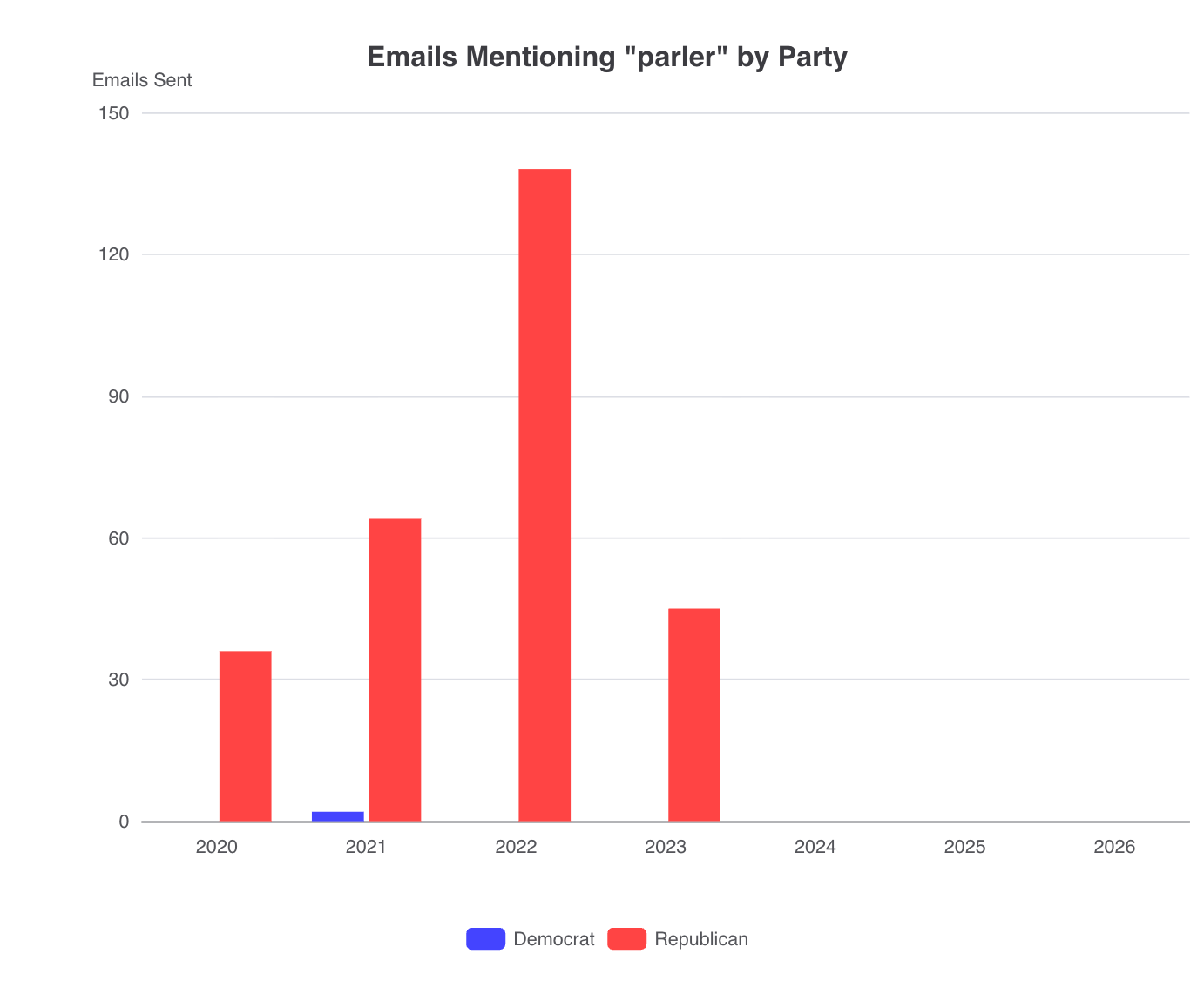
Parler, which surged in popularity after the 2020 election as an alternative to Twitter before being acquired by Starboard and then shut down.
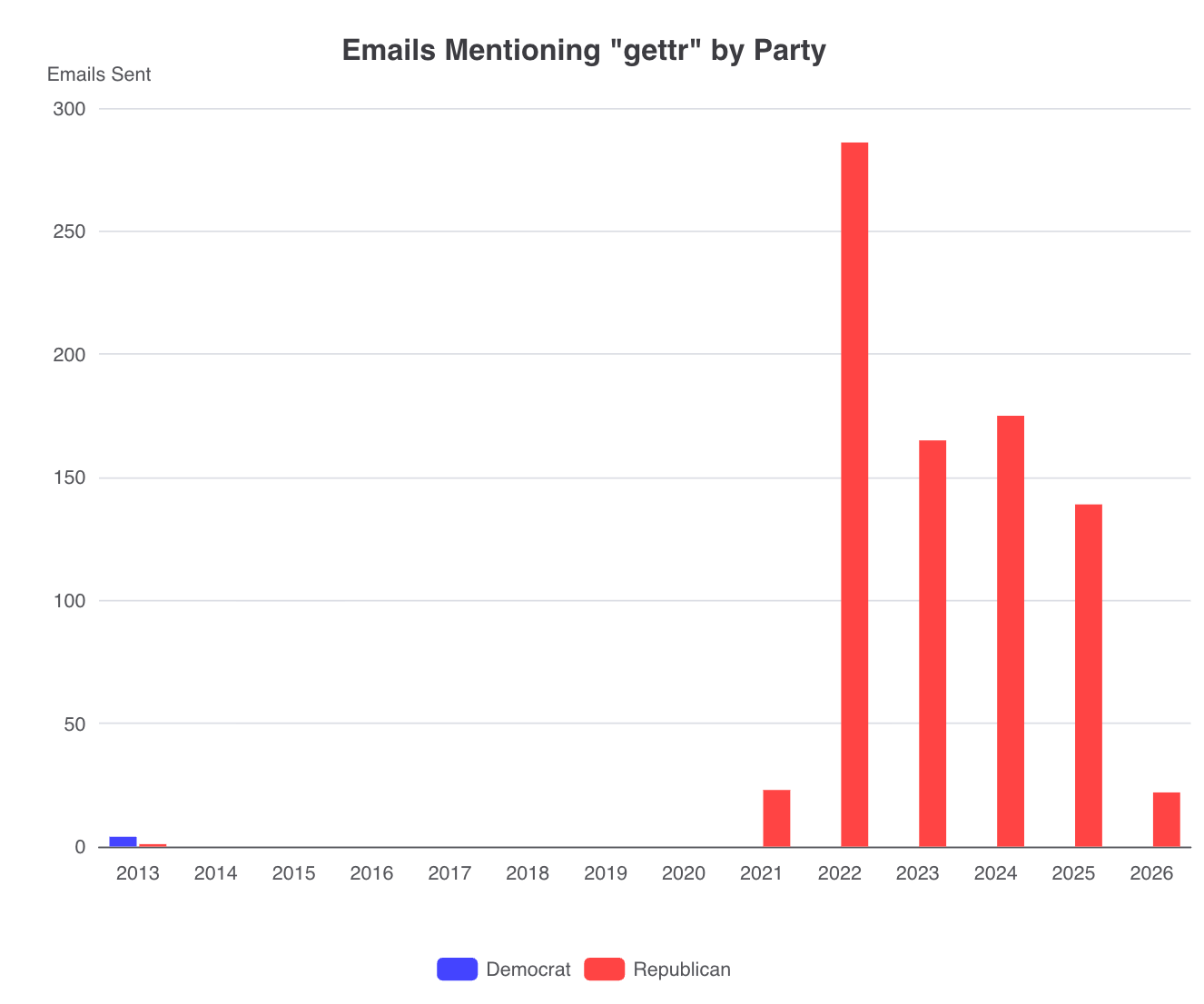
Gettr, which launched in 2021 by former Trump advisor Jason Miller as another explicitly “free speech” social network, which still sees modest mentions in official e-newsletters.
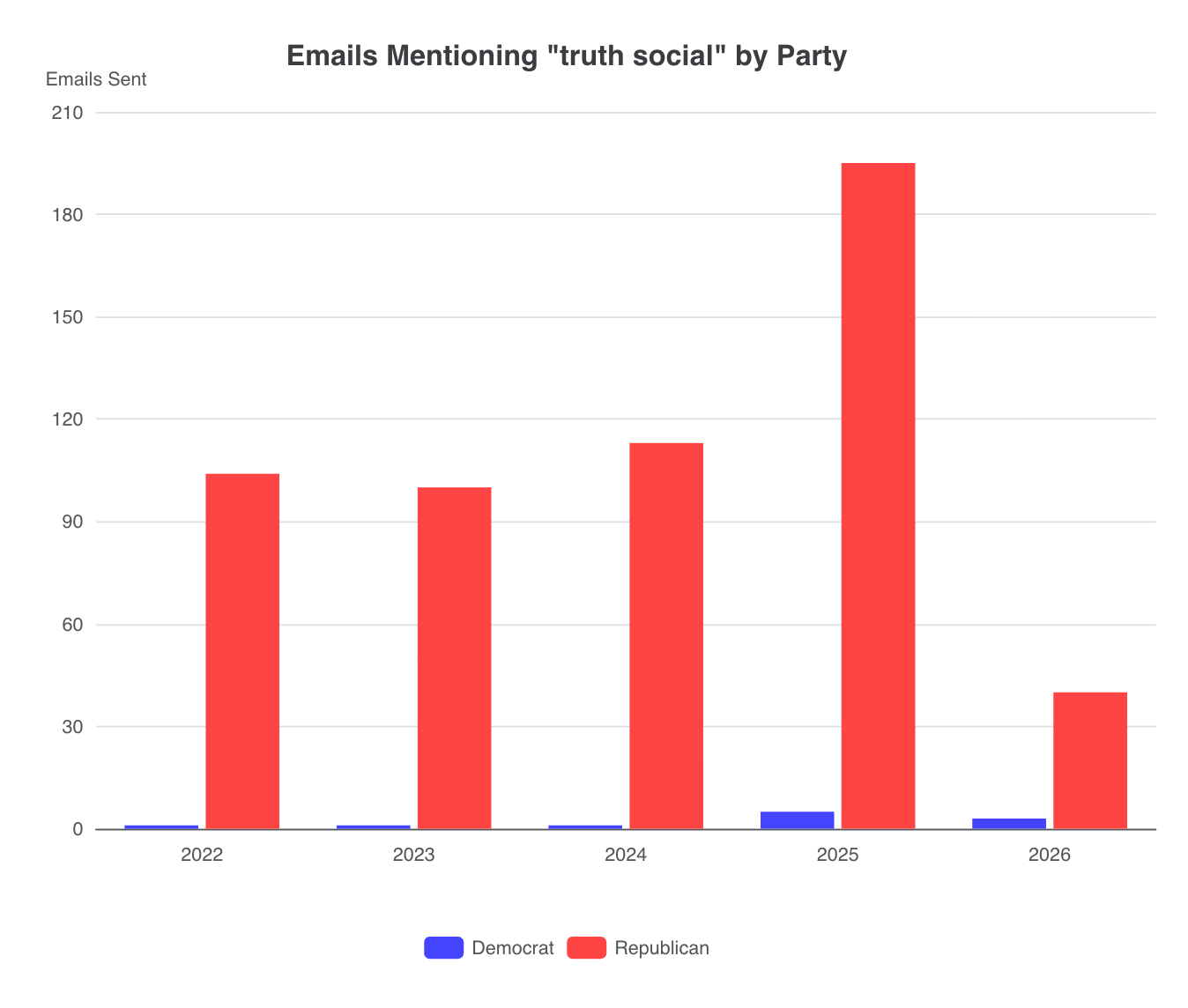
And Truth Social, which was launched in 2022 and owned by Trump Media & Technology Group and has increasingly seen mentions in official congressional e-newsletters.
And Bluesky???
Bluesky comes from a very different place. It was originally conceived in 2019 as an internal project at Twitter, designed to experiment with decentralized social media giving users more control over their data. It launched as an invite-only app in 2023 and gained traction among journalists, academics, and politically engaged users seeking an alternative to the shifting dynamics of Twitter as it became X.
The Lesson
I love learning from DCinbox. It’s such a neat way of knowing what a bunch of us feel, and learning things that other things that wouldn’t be possible if we didn’t have this record. To that end I’d be very happy to have others on that journey with me.
Now onto what I see as the bigger takeaway here. We tend to talk about “echo chambers” as if they’re some sort of accidental occurrence that happens because of algorithms or personal choices, but I don’t think (and I don’t think DCinbox shows) that to be all that’s at play. I think it’s more intentional and we have indications of that.
When a member links to Rumble instead of YouTube, or Truth Social instead of X, or pick any partisan media outlet to something that’s of use to a general audience they are shaping where the audience goes, what they see, who is talking there, what the frames are so lots more in a partisan/ideological way. Over time, those efforts compound and it means that even if Democrats and Republicans are talking about the same issue, they are doing so in entirely different informational worlds. And when that’s the case, it’s really not surprising that we have a hard time understanding each other because we are not just speaking different languages, we aren’t even in the same places to begin with.