

The E15 Exception: The Year-Round Fuel Fight in the 119th Congress
It's Corn!

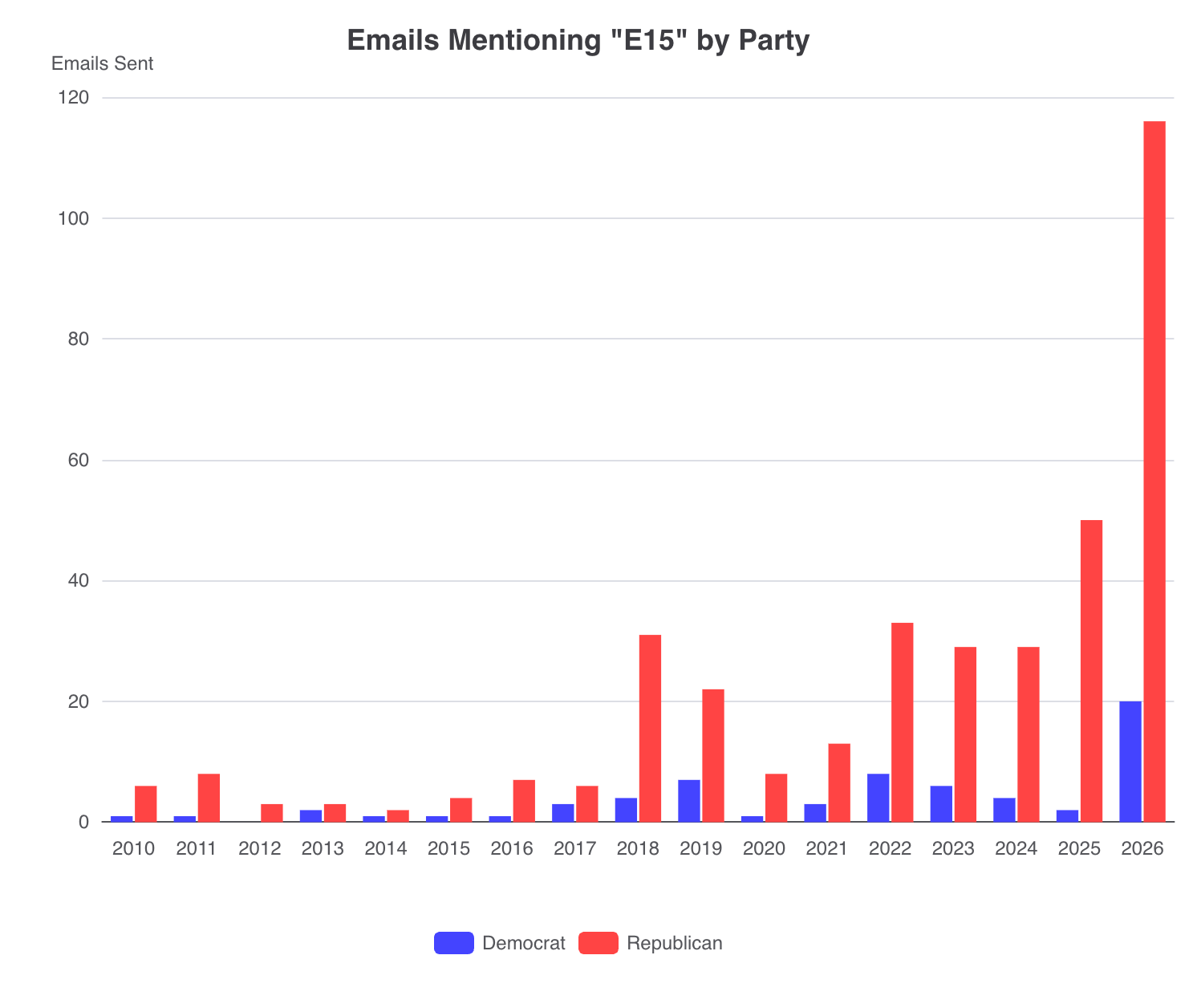
Congress has been considering whether to allow the year-round sale of E15 nationally, both through standalone bipartisan legislation and as part of the larger farm bill conversation. Right now, E15 is having it’s biggest moment in official congressional communications.
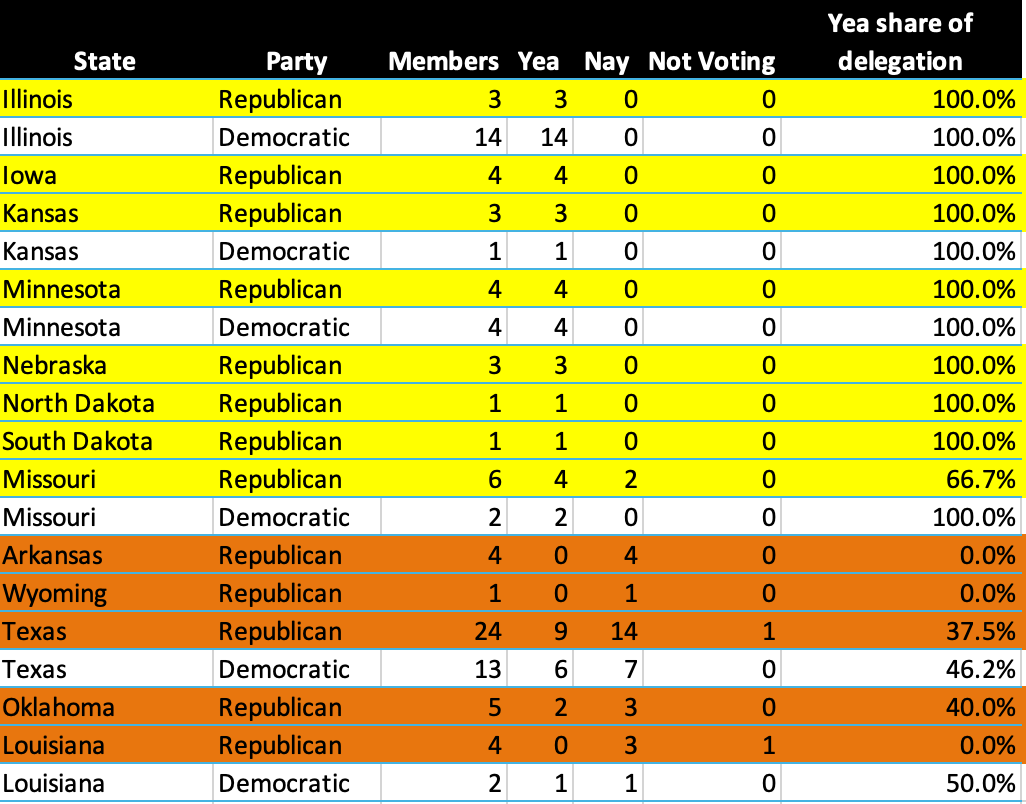
In May, the House narrowly voted (218 - 203) to advance the Nationwide Consumer and Fuel Retailer Choice Act (H.R. 1346). But this small margin was not the typical Republicans vs. Democrats split, it was much more corn country vs. oil county.
What E15 is and why summer matters
If you live in the middle of the country, you probably already know what E15 is. If you don’t, E15 is the shorthand for gasoline blended with up to 15 percent ethanol. Most gasoline sold in the United States already contains ethanol, just less than 15%.
We’ve been using ethanol for a long time in the US (over 160 years). Henry Ford even built his first automobile with plans to run it on pure ethanol. Congress has had a hand in ethanol taxes and subsidies since we’ve been using it and there are a number of interesting political angles and lessons to take from this policy space. For today I’m focusing on regulations against and waivers for the use of E15 in the summer months because that’s why members are mostly talking about.
The Renewable Fuel Standard, created in the 2005 and expanded in 2007, required transportation fuel to contain increasing volumes of renewable fuel. The EPA approved E15 for use in model year 2001 and newer cars and light-duty trucks more than a decade ago with some controversy at the time as to whether or not the blend would damage cars. Since it’s been approved for roadway vehicles E15 has faced seasonal restrictions because of federal fuel-volatility rules aimed at limiting smog-forming emissions during the summer ozone season. In principle this rule meant that E15 was supposed to only be sold in non-summer months, but in practice the EPA grants temporary “emergency waivers” due to high gas prices nearly every summer (and has for the past 10 summers straight).
The fact that it’s not fully approved for sale year round means that we all go on a predictable ride each summer where gas prices rise, farm-state legislators complain, the EPA issues emergency waivers to permit summer sales, ethanol supporters celebrate, and then everyone starts the same fight again the next year.
For E15 supporters, this ritual is absurd. Their argument is essentially: if the fuel can be sold safely, if many cars can use it, if it is cheaper at the pump, and if EPA keeps issuing emergency waivers anyway, why not make the policy permanent?
There are enough opponents to year round E15 sales that Congress has not changed the law which is why we keep getting on the summer waiver carousel. Opponents are less opposed on environmental grounds, and more unhappy in that a policy of full approval would benefit one favored industry (ethanol and corn) while creating higher relative costs for oil refiners.Nearly every e-newsletter on the topic through the entire history of DCinbox the talks about the goal of selling E15 year round, with most of these messages coming from legislators in corn growing states and mostly from Republicans.
Party Split: Corn vs. Crude
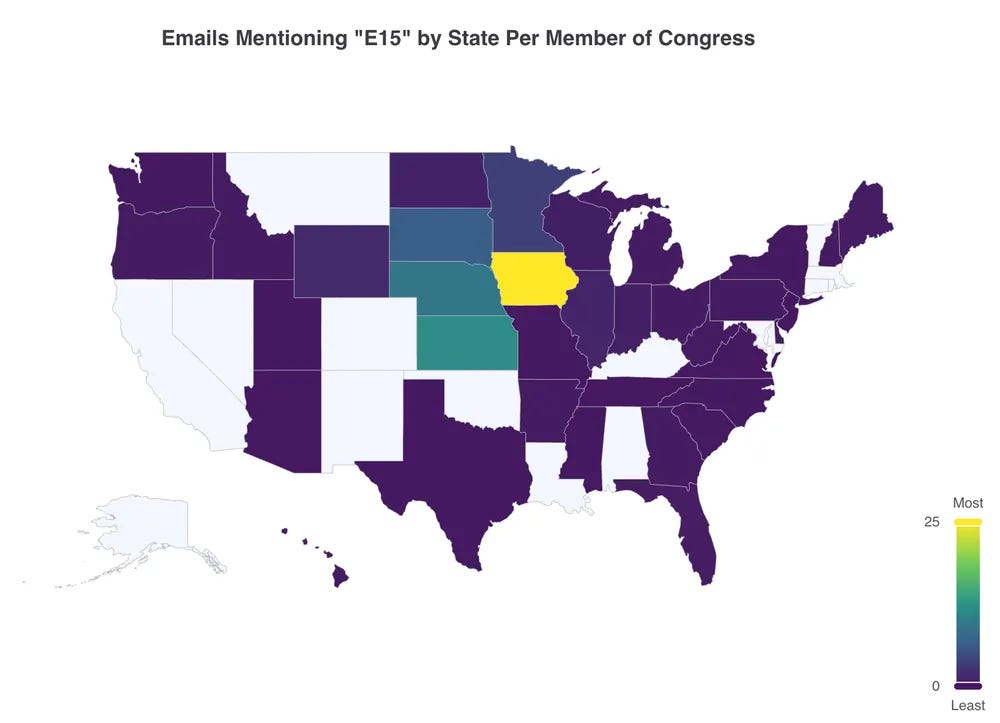
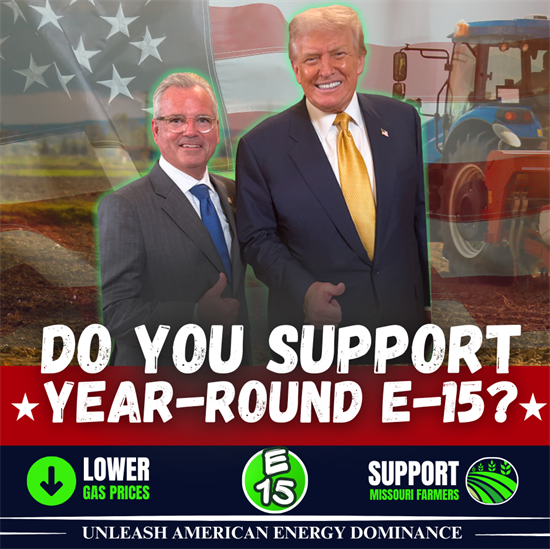
Within the Republican Party, E15 divides members by local political economy. Republicans from Iowa, Nebraska, Kansas, Missouri, South Dakota, or any state where corn, ethanol plants, and rural fuel markets matter, E15 is framed as homegrown energy, a way to lower fuel prices, supportive policy for farmers, rural reinvestment, as a way to giving families more choices at the pump, and of course as government deregulation. There are also arguments about keeping energy dollars in the United States and how agriculture is part of national security.
These are pretty good arguments, and the pro-E15 language in congressional communications is very consistent. Legislators who espouse this view are taking victory laps in communications right now and have been focused on E15 far more than opponents have been.
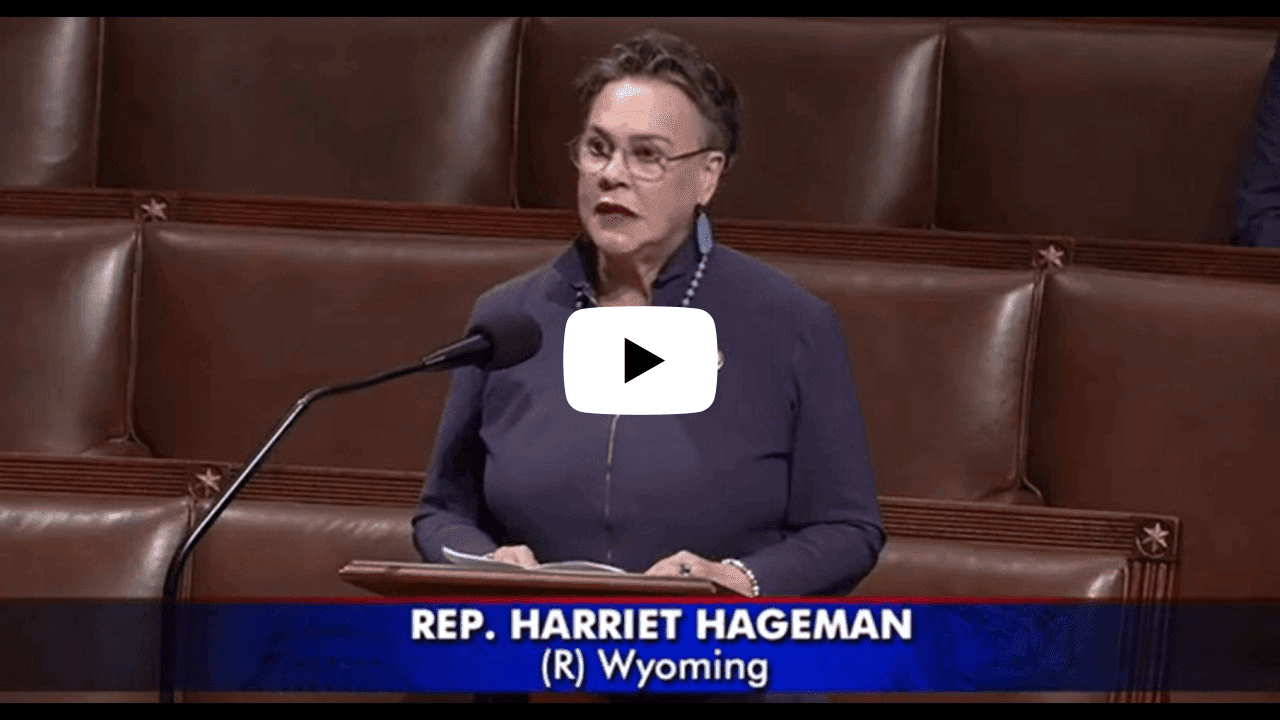
But for Republicans from Wyoming, Oklahoma, Texas, or other fossil-fuel/refining states, selling E15 year round is framed as a mandate, a quiet way of supporting the sometimes despised Renewable Fuel Standard, a hidden gas tax, a threat to refinery jobs, and a carveout for the ethanol lobby. Rep. Harriet Hageman of Wyoming wrote to constituents expressing her opposition and her effectiveness in taking out language in the Farm Bill on E15.
I voted against this effort to destroy our small refiners and undermine our ability to protect our domestic fuel production. I was fortunately able to strip this bill from the larger Farm Bill package, making its chances of passing in the Senate as a standalone bill much more difficult.
And Chip Roy of Texas pulls no punches in his take:
This mandate steadily increases the cost of fuel, acts as a stealth gas tax, forces our farmers to divert corn from our dinner tables to our gas tanks, and functionally serves as a government-required wealth transfer to the ethanol lobby.
Representative Steve Womack of Arkansas has raised a different but related concern in that using more corn for fuel can divert corn from livestock and poultry feed while placing new burdens on oil and gas producers.
Trump <3 E15
Another reason E15 works so well in Republican communications from corn states right now is because it puts them in alignment with the President. In 2018, the Trump White House announced that the administration would begin rulemaking to expand E15 fuel waivers, framing the move as part of protecting corn-based ethanol and biofuels. In 2019, Trump’s EPA finalized a rule that tried to remove the major regulatory barrier to selling E15 during the summer driving season, but in 2021, the D.C. Circuit vacated the E15 portion of the EPA rule, holding that EPA had stretched the statute too far and that the EPA could still issue waivers, but for a permanent fix, Congress would have to act. Congress didn’t.
Then in his second term, on his first day back in office, President Trump issued a national energy emergency order directing EPA and the Department of Energy to consider emergency fuel waivers allowing year-round E15 to address projected temporary gasoline supply shortfalls - EPA then used that authority to keep E15 available for the summer driving season. So corn legislators both love this policy and love how it allows the to be aligned with an offer praise for President Trump.
Democrats are mostly pro-E15 (when they talk about it)
As always, Democratic communications look different. Unlike many environmental and energy issue areas, the communications of selling E15 year round is remarkably bipartisan. Though Democrats don’t say much on the topic, when they do write about it, it’s generally positive and there’s not a public sign of an intra-party fight. There’s also the strategic benefit of the current moment in terms of high energy prices in part because of the President’s decisions in Iran foreign policy that allows Democrats to frame their support of E15 as a contrast action. Here’s Rep Krishnamoorthi on the subject earlier this year:
While ending the war must be our top priority, we also need to take immediate steps to provide relief. That’s why I am pushing for year-round nationwide sales of E15, which would give drivers a lower-cost option at the pump and help reduce pressure on fuel prices.
Illinois families should not have to bear the cost of a reckless and unauthorized war. I will continue fighting to bring down prices, expand affordable energy options like E15, and put working families first.
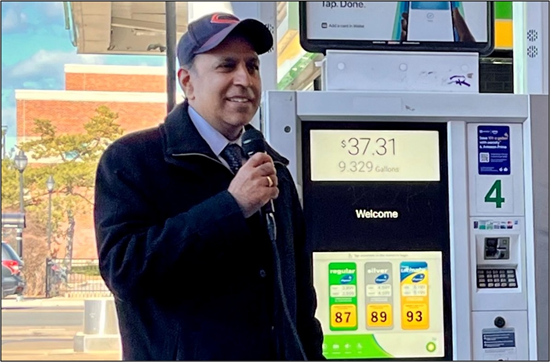
Most of the legislation on E15 is bipartisan; Democrats from corn producing states like Angie Craig of Minnesota, Cheri Bustos of Illinois, Tammy Duckworth of Illinois, Amy Klobuchar of Minnesota, and Raja Krishnamoorthi of Illinois all fit into a Democratic pro-E15 universe. These sorts of appeals are more about affordability of gas and less about farmers, but they are supportive nonetheless.
The graph below is ugly but it shows the vote split for H.R. 1346 to illustrate how corn states (yellow) differ from oil states (brown) and how those states that that have mixed party delegations generally agreed with each other on this bill.
The Insight
I like little-ish stories like how E15 is discussed in constituent comms because it brings into full relief how some things in congress are geographically determined more than ideological questions of abstract notions of energy policy. I also like it because it’s technical/a little boring, and easy to miss (there are not that many messages on this topic - but once you see it, there’s interesting stuff going on. I also like it because it demonstrates something that we oftentimes overlook in Congress, which is that members are not just reps for their party against the other party they have real intra-party divisions. Corn is one of those.
Bonus Round!
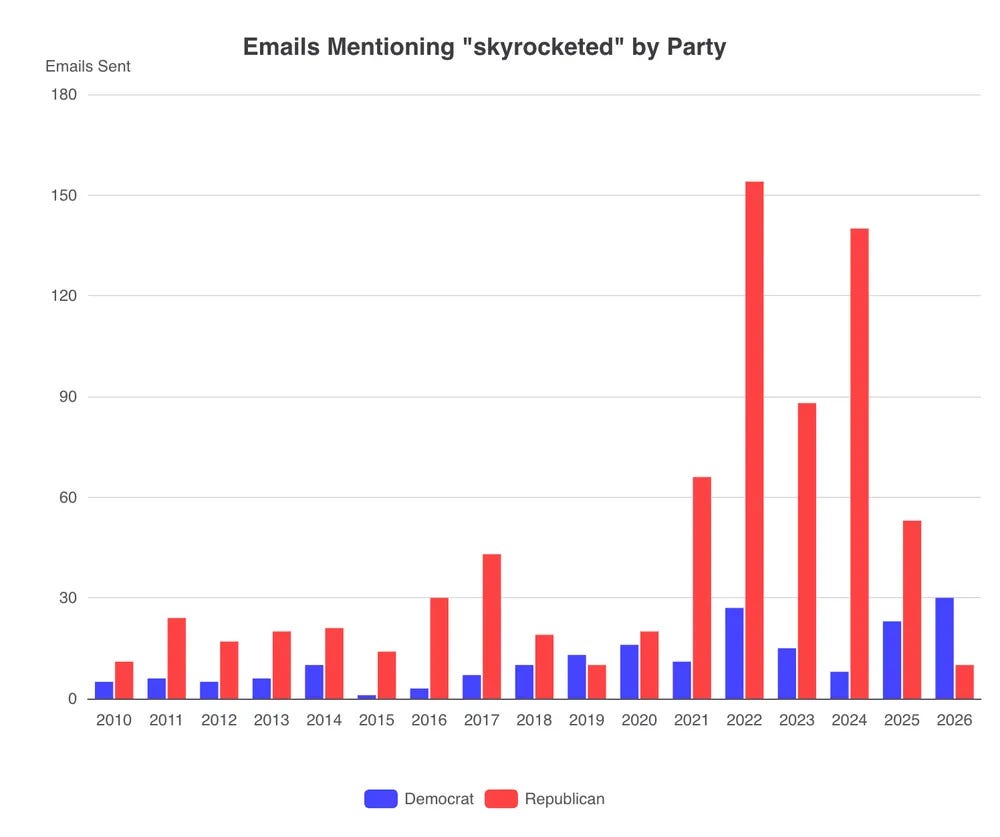
Thanks to the suggestion from a current subscriber, I have a little challenge. I’m going to put a graph here and ask for you guesses on what members of congress were referring to. For the first time since 2019 Congressional Democrats are saying "skyrocketed" more than Republicans in official e-newsletters.
This time around it's about gas prices, does anyone have guesses as to what Dems were talking about in 2019? If so, put you guesses in the comments for a chance to win a paid subscription on me.
For the love a fossil fuels this country has no equal.
How much do they send out newsletters that talk about renewable energy?